


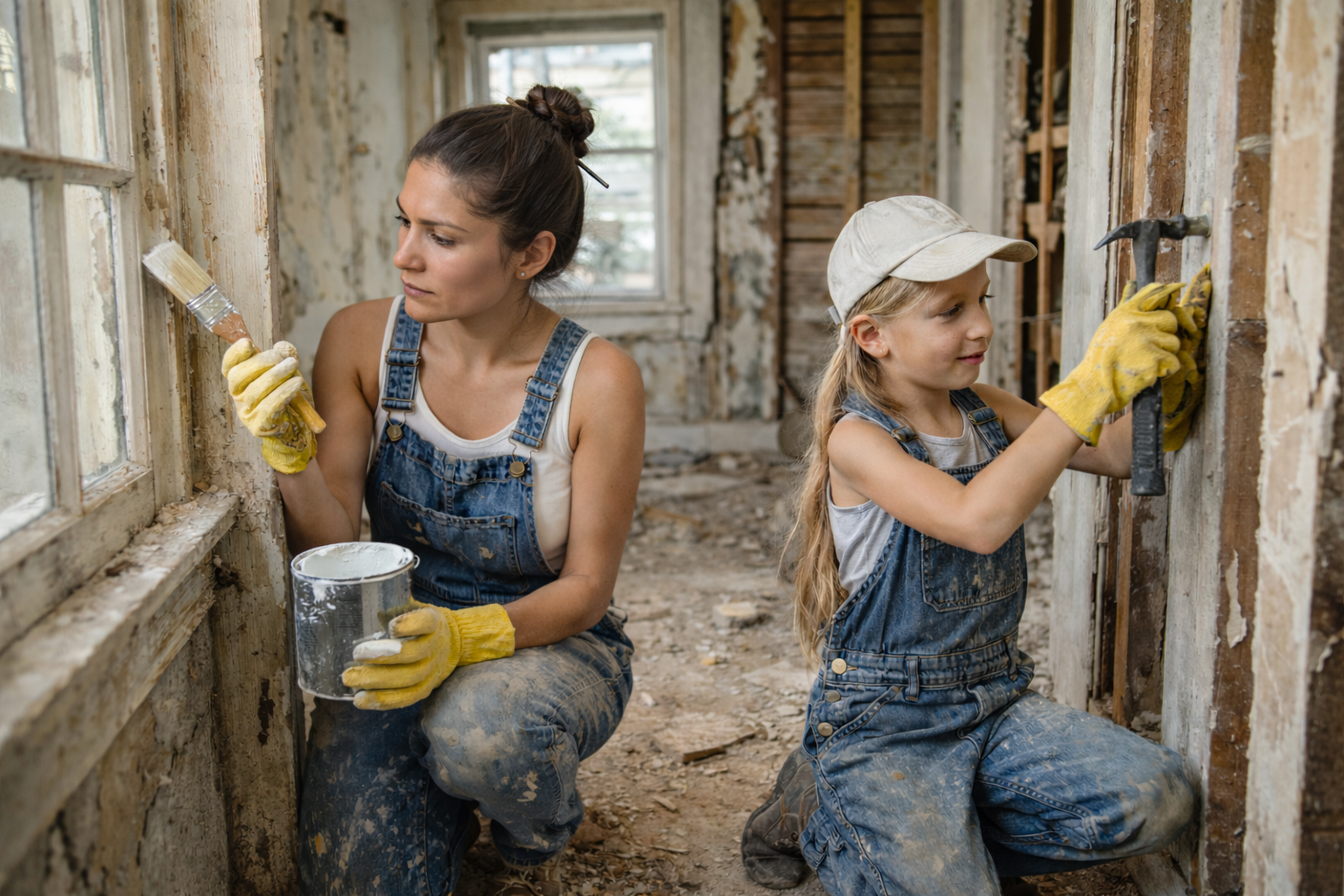
I remember the day we got the keys to our Victorian terrace. I stood in the hallway with my three kids rushing around my legs. I looked up at the original coving and the dusty floorboards. I could picture a warm family home filled with Sunday roasts and comfy evenings by the fireplace.
I saw the potential for a space that was thoughtful and balanced. I didn’t realise how much hard work and mess would come with fixing up a house while keeping a toddler from swallowing a loose screw.
In the UK, we love period properties. About 20% of our homes were built before 1919. This means millions live in houses full of history. These homes have great character, but they can also be stressful to modernise.
People often focus on the budget or the final look, but they rarely talk about what it’s like to live in a construction zone with a family. It is a journey of accepting imperfections and finding joy in the chaos, even when you feel overwhelmed.
That is exactly why I started Coffee, Crayons, and Chaos: to share those messy truths and help other mums feel a little more in control, a little more seen, and a little less pressured to do it all perfectly.
The Dust Gets Into Everything. And We Mean Everything
The first thing I wish someone had warned me about is the dust. When renovating an older home, the dust is not like what you find under the couch. It is a fine, grey powder that spreads everywhere. It doesn’t stay in the room being worked on. It sneaks closed doors, gets into kitchen cupboards, and even ends up inside sealed cereal boxes.
According to the 2025 UK Houzz & Home Study, 53% of homeowners renovating in the UK live in homes built during the 20th century. These older homes create a lot of dust during renovations. This is because they have years of materials, plaster, and old fabric in their walls, which means fine grey dust gets everywhere, no matter how carefully you try to control it.
I spent the first few weeks trying to control it. I cleaned surfaces every night to feel like a “normal” mum again. Eventually, I realised that a healthy home doesn’t always mean a spotless one. It’s okay to lower your cleaning standards for a while.
We started keeping the kids’ clean clothes in plastic boxes rather than in wardrobes to keep them fresher. This small change helped me feel better. You have to accept that, for a while, your life will have a gritty feel.
Your Builder’s Schedule and Your Kids’ Schedule Will Never Agree
When you watch home renovation shows, they finish a kitchen in an hour. In real life, especially in an older UK home, the process is much more complicated. You might lift a floorboard to fix a leak and find out that the joists underneath are original and somewhat rotting. Or you may strip wallpaper and take off half the lime plaster with it.
As a parent, I rely on routines. I like to know when dinner will be ready and where the kids will take baths. But renovating an older house disrupts those routines. These were weeks when our kitchen was just a microwave on a camping table in the living room.
I learned that being a good mother means being flexible. When the bathroom wasn’t available, we had a “spa night” at Grandma’s house. Adapting to delays is the only way to stay calm and avoid frustration.
One Room Must Stay “Normal” or You Will Lose Your Mind
If I could give one piece of advice to any family starting this journey, it is to finish one room quickly. It doesn’t have to be the biggest or best room. It just needs to be a space free of tools, dust sheets, and unfinished skirting boards.
For us, it was the kids’ playroom. Having that one completed room where we could close the door on the mess made a big difference. It helped the children feel safe and settled while the rest of the house was being worked on. After a long day of making choices about plumbing or wiring, being in a “finished” room reminded me why we were doing this.
To support your family’s mental well-being, take a look at this calming sanctuary guide to create a peaceful space at home.
The “Hidden History” is Often a Health Hazard
Older homes can feel like time capsules. Discovering a Victorian penny beneath the floorboards is exciting, but some aspects of these homes need serious attention. Many parents are unaware that homes in the UK built or renovated before 2000 often contain materials that require careful handling.
One thing I genuinely had no idea about was that several older homes still contain materials such as asbestos, especially in ceilings or old garage roofs. When we were advised to pause and get things checked before carrying on, I realised how important it was to handle it properly. But speaking to the team at Advance Asbestos Removal changed my perspective entirely. It slowed us down slightly, but as a parent, that peace of mind was worth everything.
Being cautious about these problems helped us make sure that our home is happy and healthy, and truly safe from the ground up. It’s always best to take a thoughtful and professional approach to your children’s safety.
You’ll Be Drinking Tea with Strangers Before You’re Dressed
Mornings can be chaotic when you have three kids to get ready for school while builders arrive at your door. I quickly learned that builders start work early. Having someone knock on the door at 7:30 AM while I was still in pyjamas, looking for a lost school shoe, was unexpected.
Communication is important. I found that being honest with the builders about our family schedule made things much easier. Most of them were dads, too, and understood the craziness of the “school run.” We set up a small coffee station for them so they could work while we focused on getting the children ready. It’s important to share your space respectfully, even when it feels crowded.
Your Kids Will See the Mess, But They’ll Remember the Magic
Involving your kids in a renovation can be beautiful, even with the mess and unexpected safety checks. My children have seen the hard work that goes into building a home. They helped pick paint colours and watched as a dark, damp room became a bright space for us to share.
They learned that a home is not just something you buy, but something you create. We have accepted the imperfect areas and the “lived-in” feel of our space. Some of my favorite memories are sitting on the floor of a vacant room, eating fish and chips because the table was covered with blueprints.
Conclusion
Renovating your home with kids is a challenge that no magazine can truly prepare you for. It gets loud and very dusty, and your patience will wear thin quickly.
But when you finally relax in a finished room and see your family enjoying the space you’ve worked hard for, the delays and unexpected issues start to fade away.
You’re not just fixing a house; you are making the home where your family will create its future: dust and all.
